Vietnam’s Ha Long Bay-Cat Ba Archipelago Becomes World Heritage Site
Get link
Facebook
X
Pinterest
Email
Other Apps
The outstanding values of the archipelago, the nation’s first inter-provincial UNESCO-listed world heritage site, fully meet the stringent criteria set by the World Heritage Committee.
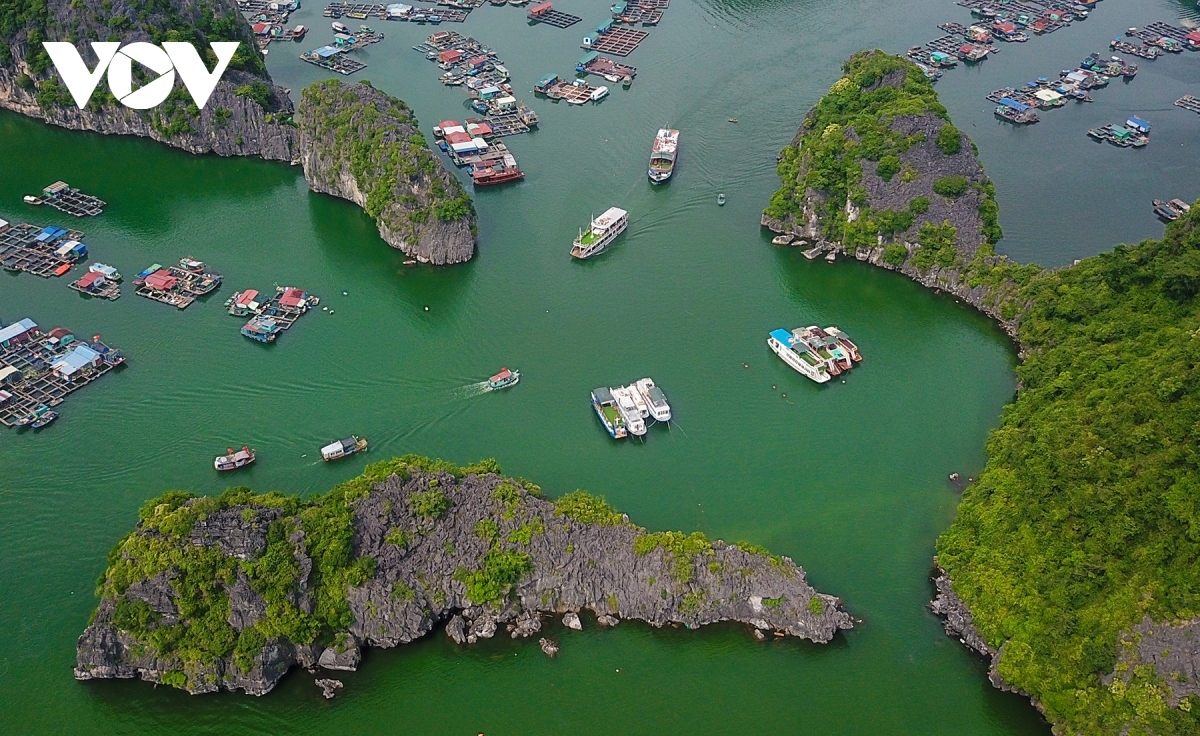
. The Ha Long Bay – Cat Ba archipelago possesses 1,133 limestone islands which come in various shapes and sizes. These rocky islands are covered full of lush vegetation.
The breathtaking scenic site is adorned with numberless majestic limestone towers, characterized by arches and caves. Hidden within the limestone towers are saltwater lakes.
The archipelago is home to 4,910 species of rare plants and animals, and it houses the country’s largest maritime forest with an area stretching for more than 17,000 hectares. Among them, 198 species are on the International Union for Conservation of Nature’s Red List of Threatened Species, including 51 endemic species. In particular, the Cat Ba Langur (Trachypithecus poliocephalus) is a rare species which features on the list of animals at highest risk of extinction.
Visitors can also easily enjoy the view of seasonal flowers blooming on cliffs, whilst witnessing endemic plants which cannot be seen elsewhere, such as Ha Long cycads and Ha palm trees.
Ha Long Bay has been recognised twice by UNESCO as a World Natural Heritage site in 1994 and 2000 while the Cat Ba archipelago with Cat Ba National Park was also listed by UNESCO as a world biosphere reserve in 2004.
Both Ha Long Bay and Cat Ba archipelago are currently the leading attractive destinations in the northern region and throughout Vietnam, attracting millions of visitors each year
Popular destinations in Ha Long Bay include Trong Mai, Dinh Huong, Ti Top, Soi Sim, and Bo Hon islands. The most unique features of the bay are more than 60 stunning caves, such as Sung Sot, Thien Cung, Dau Go, Bo Nau, and Trinh Nu
Meanwhile, Cat Ba archipelago is characterised by nearly 140 beaches, including Ang Vem, Cat Dua, Cat Co, Ben Beo, Co Tien, and Van Boi. Most notably, international tourists are very keen to experience trekking through Cat Ba National Park and explore the unique terrain, flora, and fauna found here.
In addition to natural beauty, the Ha Long – Cat Ba archipelago is also attractive due to the unique features brought by local fishing villages.
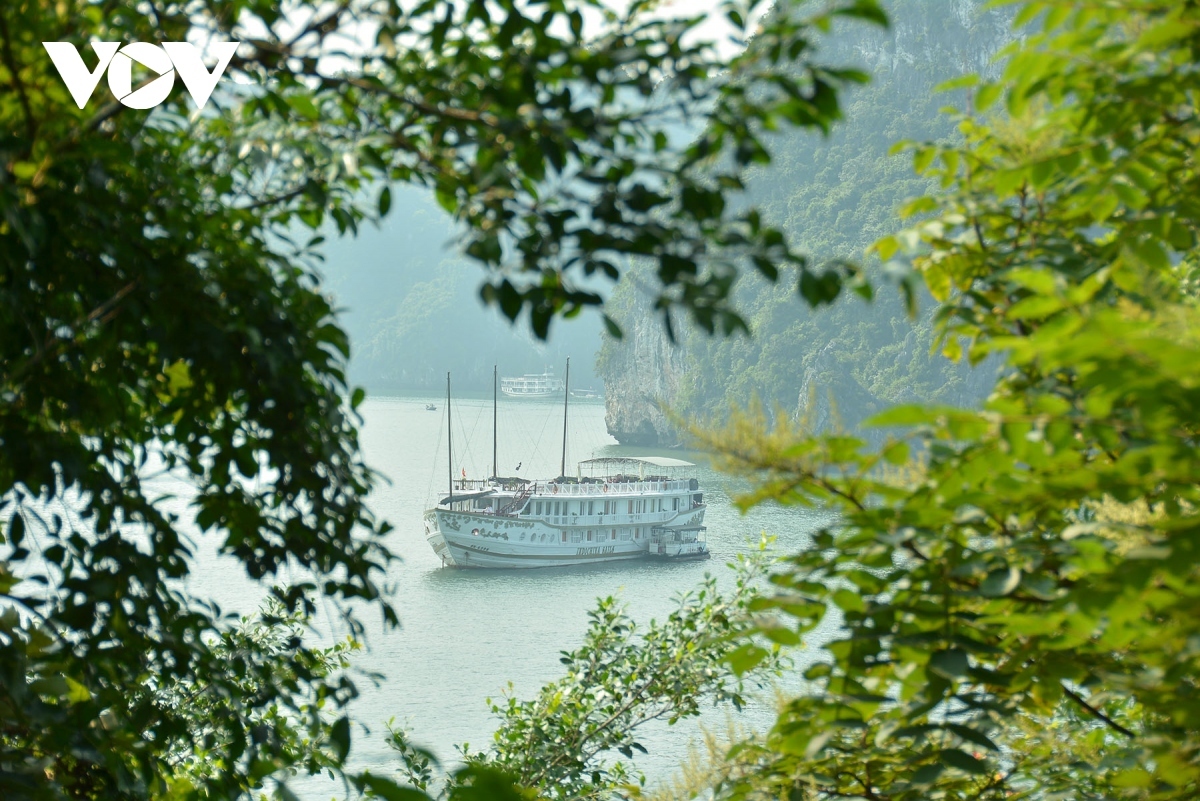
Apart from going to Ha Long in Quang Ninh or Cat Ba Island in Hai Phong for separate tours, visitors can experience “traveling through” the heritage area by ferry, connecting Tuan Chau Island (Ha Long) and Gia Luan Harbor (Cat Ba).
The Ministry of Culture, Sports, and Tourism recently signed a decision to recognize the making of chili salt in Tay Ninh Province as national intangible cultural heritage. As of 2022, 37 facilities across Tay Ninh had registered their chili salt trademarks, according to the provincial Department of Culture, Sports, and Tourism. The main ingredients to make this salt include salt, chili, garlic, monosodium glutamate, lemongrass, and dried shrimp. Tay Ninh chili salt is served with fruits. Photo: Duyen Phan / Tuoi Tre The chili salt is often served with various types of tropical fruits to enhance their flavors. The profession of making chili salt is the eighth cultural heritage of Tay Ninh to be recognized as national intangible cultural heritage. The remaining cultural heritages include Don Ca Tai Tu (Southern Folk Music), Ky Yen Festival, the making of Trang Bang dew-dried rice paper, the worship of Saint Linh Son on Ba Den Mountain, and the art of cooking ...
“Vietnamese calligraphy nourishes my soul” Jean Sébastien Grill’s calligraphy booth is named Truong Giang. “Truong Giang is my Vietnamese name, given by a friend. Giang has the same pronunciation as Jean. Truong Giang means a long, healthy life,” said Jean. Jean has studied Vietnamese for 7 years and lived in Vietnam for 6 years. Before coming to Vietnam, he worked as a graphic designer and studied oriental medicine, massage and acupressure to help friends and colleagues suffering from spine problems. Jean married an overseas Vietnamese in 2006. On their first trip to Hanoi, they were so impressed by the bustling sidewalks and folk medicine that they return to Vietnam every year to travel and learn more about Oriental medicine. Jean, his wife, and their children moved to Vietnam in 2015, when he was introduced to Vietnamese calligraphy. “I knew about Korean, Chinese, and Japanese calligraphy long before but when I learned that Vietnam also has this kind of art, I signed up for cl...
The Vietnam National Fine Arts Museum in Hanoi is currently hosting the fourth solo exhibition of esteemed Vietnamese artist Nguyen Ngoc Phuong. Entitled “Heafod”, this captivating exhibition will be open to the public until July 31. The exhibition, titled “Heafod,” is on display at the Vietnam National Fine Arts Museum until July 31. Photo courtesy of the museum The exhibition showcases a collection of 19 of Nguyen Ngoc Phuong’s latest works, providing a thought-provoking exploration into the complexity of the human soul, disinterest and/or ontological uncertainty, and existential anguish. According to esteemed art critics, “The Heafod” is a pivotal work in Phuong’s innovative approach to visual art. Her paintings intricately combine spontaneous and deliberate elements, resulting in a captivating interplay of accidental and purposeful marks. These marks evolve over time, gaining intensity and intention akin to scratches and cuts on the skin. The Heafod Exhibition Ex...








Comments
Post a Comment