Examining the Gold Imperial Seal of the Nguyen Dynasty’s Return to Vietnam
Get link
Facebook
X
Pinterest
Email
Other Apps
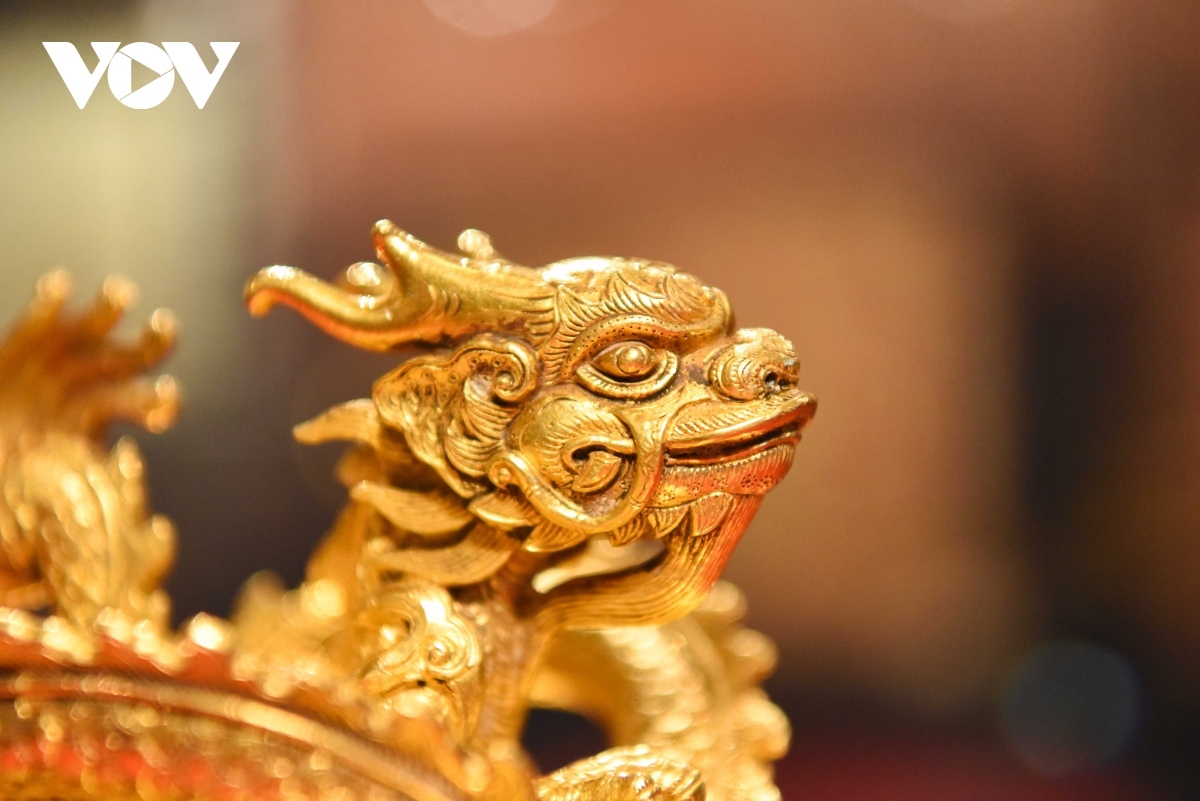
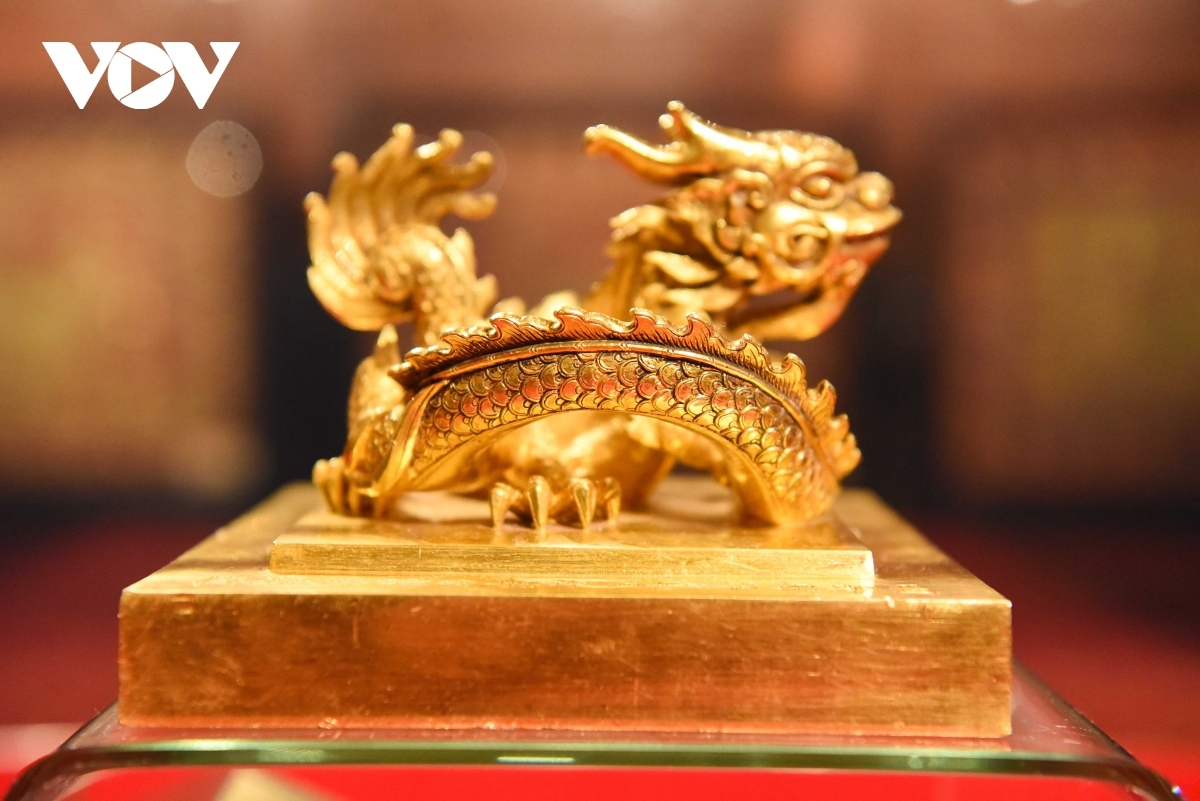
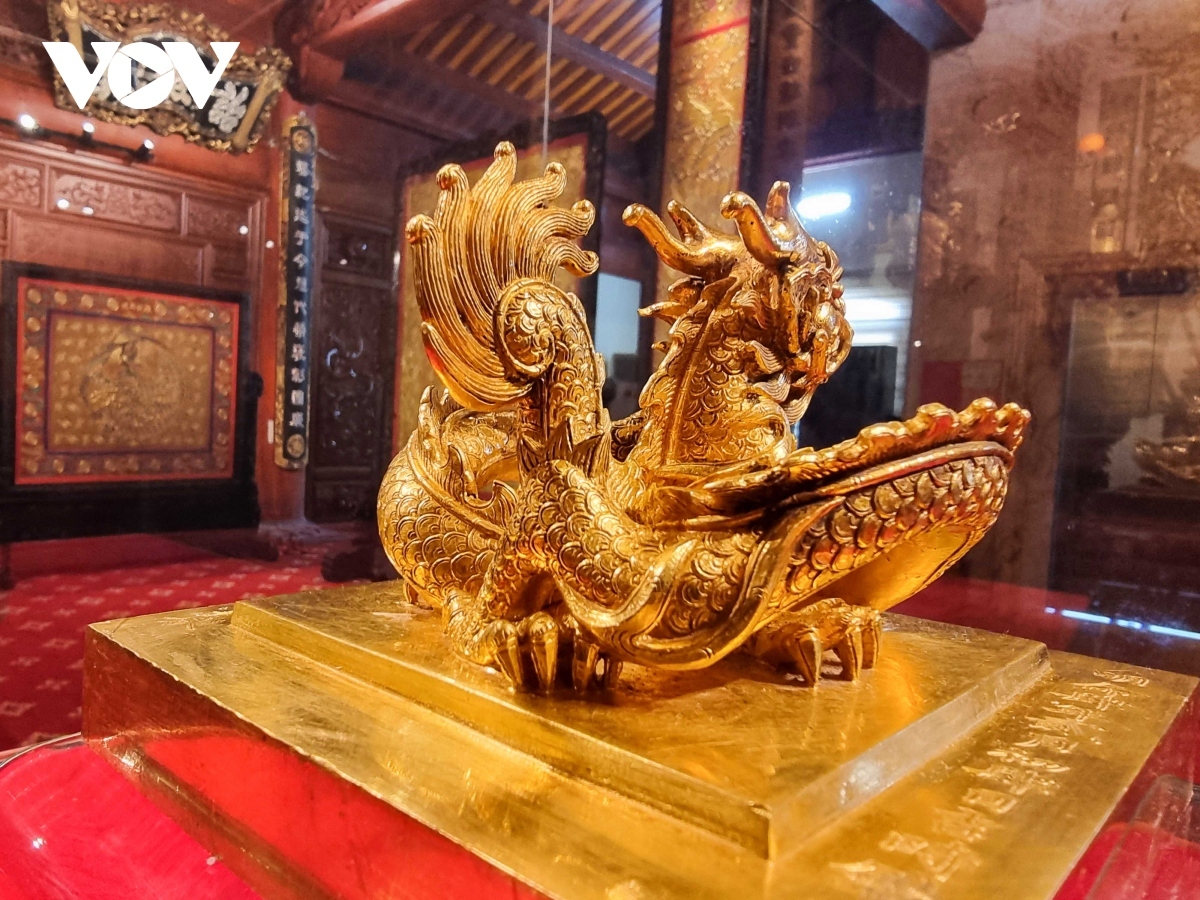
According to the Department of Cultural Heritage, the gold seal is 10.4 centimetres high, weighs 10.78 kilograms, and measures 13.8×13.7 cm.
The treasure is an important cultural heritage symbolising political power during a period in Vietnamese history, marking the transition from monarchy to modern democracy in the Ho Chi Minh era.
The seal was cast in 1823 under the reign of King Minh Mang, the second emperor of the Nguyen Dynasty, who ruled from 1820 till his death in 1841.
The Nguyen Dynasty, which ruled from 1802 to 1945, was the last monarchy in Vietnamese history. It crafted and put into use more than 100 seals, often cast in gold, silver, or precious jade. Currently, the National Museum of History is storing and preserving 85 precious jade seals of the Nguyen Dynasty.
An imprint of the gold seal of the Nguyen Dynasty
The seal is an extremely valuable historical and cultural heritage for Vietnam, says Nguyen The Hong, representative of the Nam Hong Museum, expressing hope that more and more precious artifacts will be repatriated to the fatherland in future.
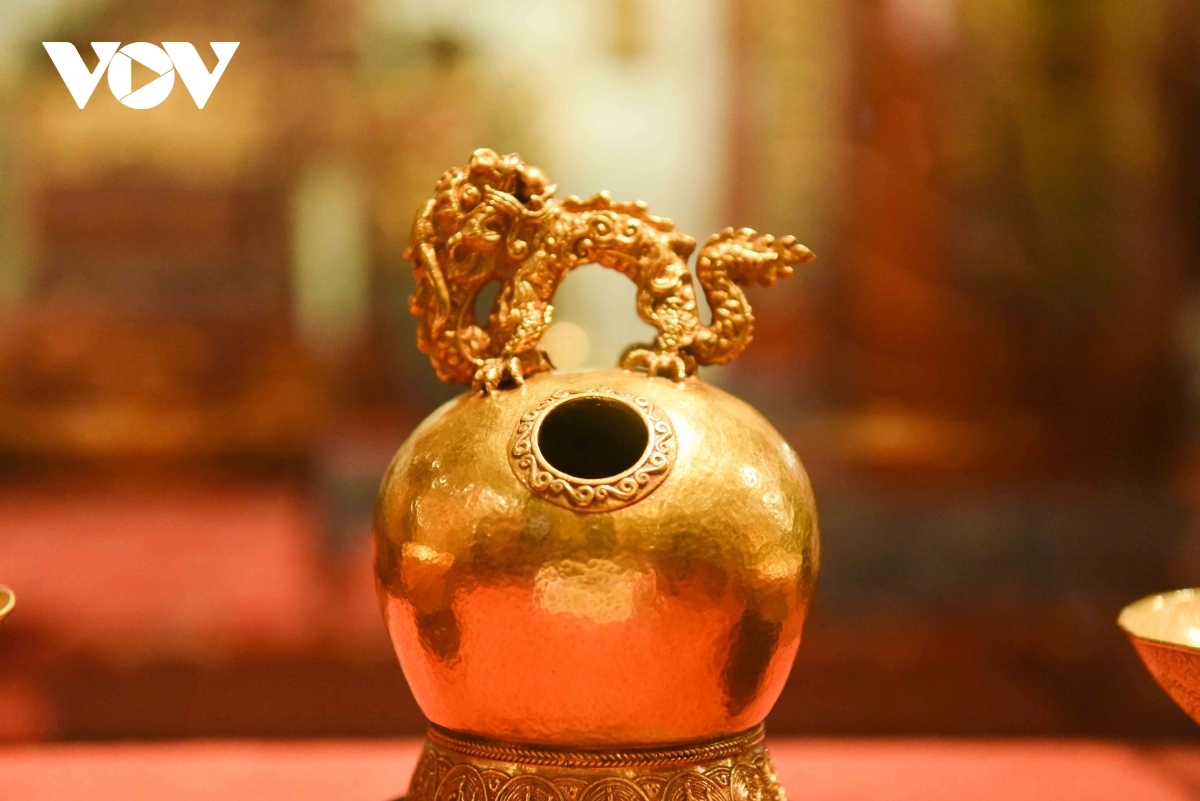
On October 19, 2022, French auction house Millon announced its auction of 329 antiquities, including two dating back to the Nguyen Dynasty, a golden seal made in 1823 under the reign of King Minh Mang, and a golden bowl made under the reign of King Khai Dinh who ruled from 1917 to 1925.
After the confirmation of the authenticity of the seal, a Vietnamese inter-ministerial delegation and the auction house agreed to transfer them to the nation.
On November 14 all sides agreed to carry out relevant legal processes and procedures for the repatriation of the seal back to Vietnam in accordance with the laws of both nations.
Nam Hong Museum in the northern province of Bac Ninh has been chosen to carry out relevant financial procedures according to French law. A contract to purchase the seal valued at EUR6.1 million was signed in France on January 13.
The Ministry of Culture, Sports and Tourism asked the museum to preserve, display, and co-ordinate with the National Museum of History in protecting and promoting the value of heritage according to the provisions of the Law on Cultural Heritage.
The Nguyen Dynasty’s gold imperial seal is handed over to Vietnam at a ceremony held at the Vietnamese Embassy in France on November 16.
The Ministry of Culture, Sports, and Tourism recently signed a decision to recognize the making of chili salt in Tay Ninh Province as national intangible cultural heritage. As of 2022, 37 facilities across Tay Ninh had registered their chili salt trademarks, according to the provincial Department of Culture, Sports, and Tourism. The main ingredients to make this salt include salt, chili, garlic, monosodium glutamate, lemongrass, and dried shrimp. Tay Ninh chili salt is served with fruits. Photo: Duyen Phan / Tuoi Tre The chili salt is often served with various types of tropical fruits to enhance their flavors. The profession of making chili salt is the eighth cultural heritage of Tay Ninh to be recognized as national intangible cultural heritage. The remaining cultural heritages include Don Ca Tai Tu (Southern Folk Music), Ky Yen Festival, the making of Trang Bang dew-dried rice paper, the worship of Saint Linh Son on Ba Den Mountain, and the art of cooking ...
“Vietnamese calligraphy nourishes my soul” Jean Sébastien Grill’s calligraphy booth is named Truong Giang. “Truong Giang is my Vietnamese name, given by a friend. Giang has the same pronunciation as Jean. Truong Giang means a long, healthy life,” said Jean. Jean has studied Vietnamese for 7 years and lived in Vietnam for 6 years. Before coming to Vietnam, he worked as a graphic designer and studied oriental medicine, massage and acupressure to help friends and colleagues suffering from spine problems. Jean married an overseas Vietnamese in 2006. On their first trip to Hanoi, they were so impressed by the bustling sidewalks and folk medicine that they return to Vietnam every year to travel and learn more about Oriental medicine. Jean, his wife, and their children moved to Vietnam in 2015, when he was introduced to Vietnamese calligraphy. “I knew about Korean, Chinese, and Japanese calligraphy long before but when I learned that Vietnam also has this kind of art, I signed up for cl...
The Vietnam National Fine Arts Museum in Hanoi is currently hosting the fourth solo exhibition of esteemed Vietnamese artist Nguyen Ngoc Phuong. Entitled “Heafod”, this captivating exhibition will be open to the public until July 31. The exhibition, titled “Heafod,” is on display at the Vietnam National Fine Arts Museum until July 31. Photo courtesy of the museum The exhibition showcases a collection of 19 of Nguyen Ngoc Phuong’s latest works, providing a thought-provoking exploration into the complexity of the human soul, disinterest and/or ontological uncertainty, and existential anguish. According to esteemed art critics, “The Heafod” is a pivotal work in Phuong’s innovative approach to visual art. Her paintings intricately combine spontaneous and deliberate elements, resulting in a captivating interplay of accidental and purposeful marks. These marks evolve over time, gaining intensity and intention akin to scratches and cuts on the skin. The Heafod Exhibition Ex...







Comments
Post a Comment